

On this page 9 sections
- The foundation: ABHA and the Ayushman Bharat Digital Mission
- eSanjeevani: telemedicine with an AI assistant for doctors
- AI in TB screening
- AI for diabetic eye screening
- Other places AI shows up in Indian hospitals
- Who regulates AI in healthcare in India
- Limits and risks you should know about
- What to expect next
- Frequently asked questions
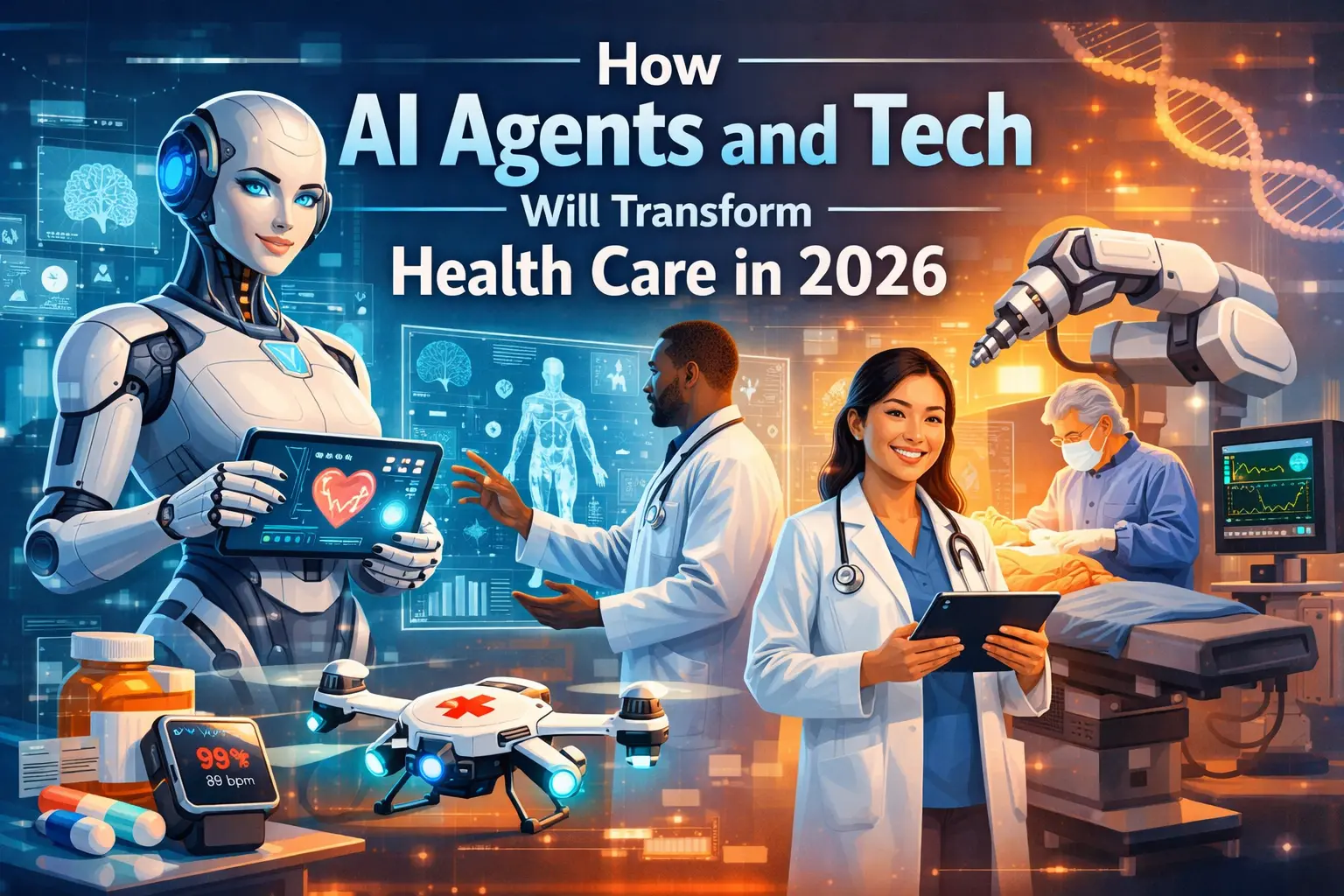
AI in healthcare in India is no longer a pilot project. In 2026 it reads chest X-rays in the national TB programme, screens diabetic patients for eye damage in rural clinics, and supports doctors with decision-support software during eSanjeevani consultations. Most of it sits on top of a public digital health system that now holds over 90 crore health accounts.
It still doesn't replace doctors, and it comes with real risks around privacy, bias and accountability. This guide explains what's actually deployed, how it affects you as a patient, and the new rules that govern it. It's general information, not medical advice. Talk to a qualified doctor about your own health.
The foundation: ABHA and the Ayushman Bharat Digital Mission
AI needs data, and India's health data has historically been scattered across paper files and hospital systems that don't talk to each other. The Ayushman Bharat Digital Mission (ABDM), launched in September 2021, tries to fix that.
Its centre is the ABHA (Ayushman Bharat Health Account), a random 14-digit health ID that anyone can create free of cost, usually with an Aadhaar OTP. Hospitals, labs and pharmacies that join ABDM can link your records to it, and you choose who sees them through a consent request on your phone. According to a July 2026 government factsheet, more than 90 crore ABHA accounts had been created and over 100 crore health records linked by May 2026.
What this means in practice:
- You can carry lab reports and prescriptions between hospitals in an app instead of a plastic folder.
- Many hospitals let you scan a QR code and get an OPD queue token with your ABHA, skipping the registration counter. Over 23 crore such tokens had been issued by June 2026, per the same factsheet.
- Linked, structured records are what future AI tools need to spot patterns, such as drug interactions or missed follow-ups.
Creating an ABHA is free and optional, and it has no effect on your eligibility for Ayushman Bharat PM-JAY insurance. Use the official ABDM website or the government's ABHA app.
eSanjeevani: telemedicine with an AI assistant for doctors
eSanjeevani is the Health Ministry's free telemedicine service. It runs in two ways: a health worker at an Ayushman Arogya Mandir (the renamed health and wellness centres) connects a patient to a doctor at a hub, or a patient consults a doctor directly from home through the app.
In October 2026 it crossed 50 crore teleconsultations, with women making up over 57% of users. It links more than 1.42 lakh Ayushman Arogya Mandir spokes to over 19,000 hubs and works in 15 languages.
The AI part is a Clinical Decision Support System (AI-CDSS) that supports the doctor during a consultation. The doctor still makes the decision. For a patient in a village with no specialist nearby, the practical gain is faster access to a qualified doctor, with software helping that doctor not miss something.
AI in TB screening
India has the world's largest tuberculosis burden, and the National TB Elimination Programme now uses AI in several places. Under the 100-day intensified TB campaign that began in December 2024 in 347 priority districts, the government told the Rajya Sabha that three AI tools were in use:
- DeepCXR, software that reads chest X-rays of people suspected to have TB, deployed in eight states and union territories.
- AI-enabled handheld X-ray machines, portable units used to screen vulnerable people in the field, with central procurement approved to expand them in high-burden areas.
- An AI-based Line Probe Assay system that automates reading and recording a lab test used to detect drug-resistant TB.
The point isn't that AI diagnoses TB on its own. A flagged X-ray still leads to a confirmatory test like a sputum test, and treatment is decided by doctors. AI helps by screening many more people quickly, which matters because TB caught early is easier to treat and spreads less.
AI for diabetic eye screening
Diabetic retinopathy, damage to the retina caused by diabetes, can lead to blindness if it isn't caught early, and India doesn't have enough eye specialists to check every diabetic patient each year. That makes it one of the best-tested uses of medical AI.
Aravind Eye Hospital in Madurai has worked with Google since 2013 on an AI model that grades retinal photos. IndiaAI reports that the tool is used at Aravind's vision centres across rural Tamil Nadu. A technician takes a photo of the back of the eye, the software flags likely damage, and patients who need it are referred to a specialist.
In October 2024, Google said it was licensing the model to partners including Forus Health and AuroLab, with a goal of 6 million AI-supported screenings over 10 years at no cost to patients in India and Thailand, subject to local regulatory approvals.
Other places AI shows up in Indian hospitals
Beyond these public programmes, private hospitals and health-tech companies use AI for tasks that are less visible to patients:
- Radiology support: software that pre-reads X-rays and CT scans and puts urgent cases at the top of a radiologist's list.
- Paperwork: tools that turn a doctor's spoken notes into a written summary, or help with insurance claim documents.
- Appointment and pharmacy chatbots: booking, reminders and refill alerts on WhatsApp or apps.
- "AI agents": newer systems that can carry out multi-step tasks, like scheduling a follow-up and sending lab instructions. These are early, and any clinical step should still be checked by staff.
If you're curious about the general tools behind many of these products, our guide to the top AI tools in 2026 covers the main assistants.
Who regulates AI in healthcare in India
Three sets of rules matter in 2026.
| Rule | What it covers |
|---|---|
| CDSCO medical device software guidance | Software that performs a medical function, including AI tools that support diagnosis, is treated as a medical device under the Medical Devices Rules, 2017. A draft came out in October 2025 and a final version followed in 2026, with expectations on validation in Indian settings, cybersecurity, post-market monitoring and checking AI for bias. Wellness and fitness apps are excluded. |
| Digital Personal Data Protection (DPDP) Act, 2023 and Rules, 2025 | Health data is personal data. The Rules were notified on 14 November 2025 with an 18-month phased compliance period. You have the right to give and withdraw consent, access your data, correct it and ask for it to be erased in certain cases. Penalties go up to ₹250 crore for failing to protect data. |
| ICMR ethical guidelines for AI in healthcare (2023) | Ethics guidance for researchers and hospitals on consent, safety, accountability and fairness when building or using AI in health. |
The CDSCO details are summarised by Digital Health News, and the DPDP rights and penalties are in the government's explainer.
Limits and risks you should know about
AI in healthcare can help a lot, but the problems are real and you should keep them in mind as a patient.
- Privacy: health records are sensitive. Only share your ABHA records through the consent screen, check which app is asking, and revoke access you no longer need. Under the DPDP Act you can ask a hospital or app what data it holds about you.
- Bias: a model trained mostly on one population, or on images from expensive machines, may work less well on others. That's why the CDSCO guidance asks for validation in Indian clinical settings.
- Over-trust: AI can be confidently wrong. A screening flag is a reason to see a doctor, and a clean result isn't a guarantee. Don't use a chatbot's answer in place of a medical opinion.
- Accountability: when software helps make a decision, it should still be clear which doctor is responsible. Ask your doctor if an AI tool was used and how it affected their advice.
- Access gaps: telemedicine needs a phone, data and some digital confidence. Health workers at Ayushman Arogya Mandirs exist partly to bridge that gap.
What to expect next
The direction is clear even if the timeline isn't: more of your health records will be digital and portable, more screening will happen closer to home with AI doing a first read, and more regulation will apply to the software doing it. For patients, the useful steps today are simple. Create an ABHA if you want portable records, use eSanjeevani for routine consultations when a clinic is far away, and keep a doctor in charge of every decision.
Frequently asked questions
Will AI replace doctors in India?
No. Current tools in India, such as eSanjeevani's decision support and AI X-ray screening, are built to assist doctors and health workers, who make the final decision. The bigger change is that one doctor can reach more patients. For more on how AI is changing work in general, see our article on whether AI is replacing jobs.
Is it safe to create an ABHA health account?
ABHA is voluntary, and your records are shared only when you approve a consent request. As with any digital account, use the official ABDM site or approved apps, never share OTPs, and review which providers have access to your records.
Is eSanjeevani free?
Yes, eSanjeevani is a free government telemedicine service. You can use it from home through the app or website, or through a health worker at an Ayushman Arogya Mandir.
How is AI used to detect TB in India?
The national TB programme uses AI software to read chest X-rays, AI-enabled handheld X-ray machines for field screening, and AI to automate a lab test for drug-resistant TB. People flagged by AI still get confirmatory tests and are treated by doctors.
Who regulates AI medical software in India?
The Central Drugs Standard Control Organisation (CDSCO) regulates software that performs a medical function as a medical device under the Medical Devices Rules, 2017. Health data handling falls under the DPDP Act, 2023 and its 2025 Rules.



Comments 0
No comments yet. Start the conversation.