

On this page 7 sections
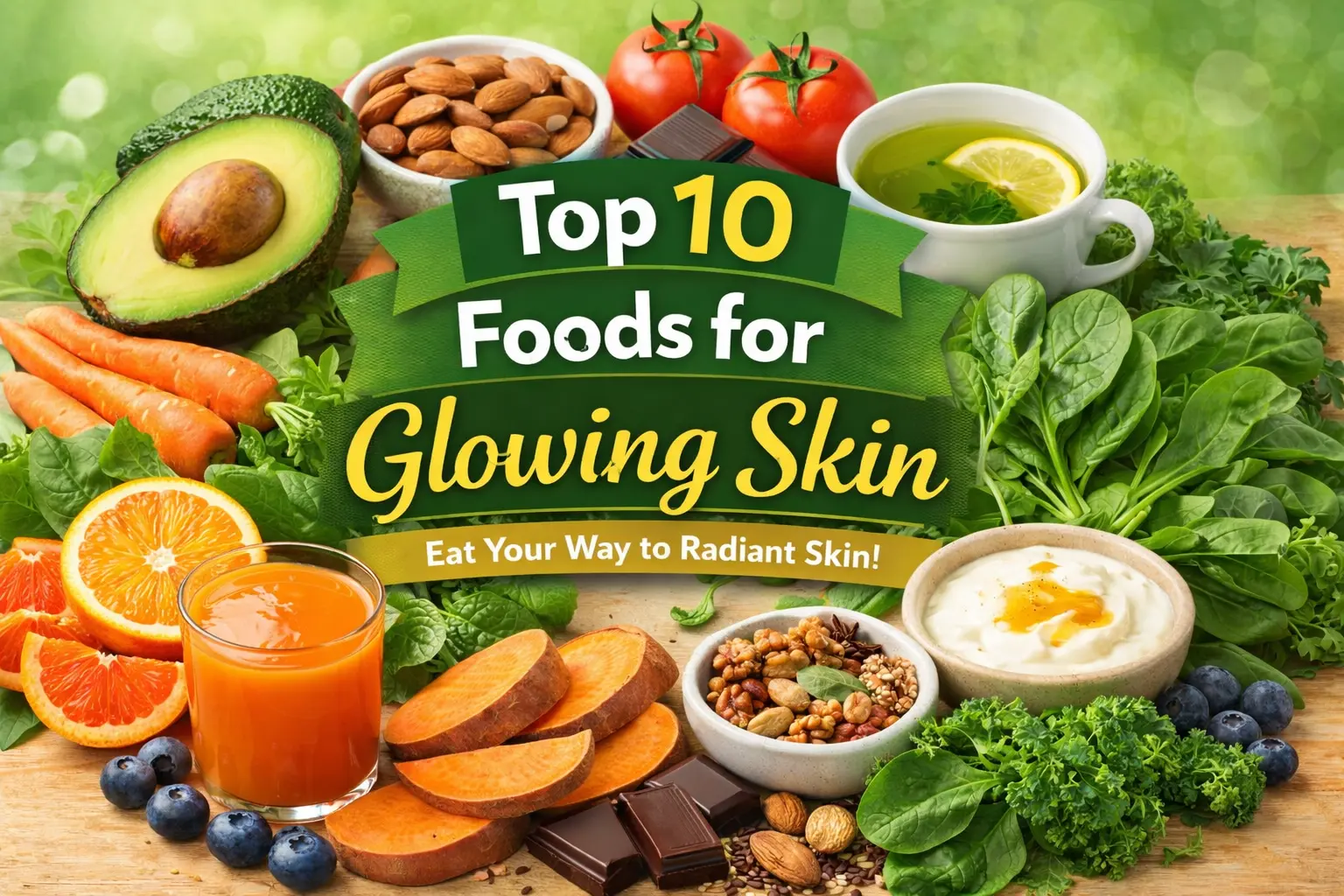
The foods for glowing skin that actually have evidence behind them are boring and cheap: fruit rich in vitamin C like amla and guava, orange and green vegetables, dal and other protein, nuts and seeds, and enough water. Eat them regularly for a few months and your skin gets the raw material it needs. Don't expect any single food to clear acne, lighten pigmentation or replace sunscreen.
That last point matters, because a lot of "glow food" content promises far more than the science supports. This guide sticks to what's known, uses foods you'll find at any sabziwala or kirana store, and tells you when to stop experimenting and see a dermatologist.
What diet can and can't do for your skin
Your skin is built from what you eat. Vitamin C, for example, is needed to make collagen, the protein that keeps skin firm. The US National Institutes of Health vitamin C fact sheet notes that a lack of it "impairs collagen synthesis, weakening connective tissues", and that severe deficiency shows up on the skin as bruising and poor wound healing.
But the research on food making healthy skin look better is mixed. A 2012 review in Dermato-Endocrinology, "Discovering the link between nutrition and skin aging", calls the evidence "controversial and conflicting" and concludes that eating fruit and vegetables is the safest approach. It also warns against high-dose antioxidant supplements.
So here's the honest version:
- Diet can: fix deficiencies, support normal repair, and help skin stay hydrated.
- Diet can't: stand in for sunscreen, treat acne or eczema, "detox" your skin, or change your natural skin tone.
Your liver and kidneys handle detox. No juice does it for them.
The 10 foods for glowing skin, and why they help
1. Amla (Indian gooseberry)
Amla is one of the richest everyday sources of vitamin C, which your body needs for collagen. One fresh amla a day, or a little amla chutney or murabba, is enough to make a dent. Fresh amla is easiest to find and cheapest in winter. Murabba is often heavy on sugar, so treat it as an occasional option.
2. Guava, oranges and other vitamin C fruit
If amla is too sour for you, guava (amrood), oranges, mosambi, papaya and kiwi also give you vitamin C. Eat the whole fruit rather than packaged juice; you get fibre and skip the added sugar. Vitamin C breaks down with heat and storage, so fresh fruit beats boiled or reheated sources.
3. Carrots, papaya and shakarkandi (sweet potato)
These orange foods carry beta-carotene, which your body turns into vitamin A. Vitamin A is needed for normal skin cell growth. The 2012 review above found that beta-carotene may reduce redness from sun exposure slightly, but only after about 12 weeks of regular intake, and short 3 to 4 week trials showed no effect. Gajar ki sabzi, a carrot in your salad, or roasted shakarkandi from a street cart all count.
Skip beta-carotene pills unless a doctor prescribes them. The same review notes a large trial that linked high-dose beta-carotene supplements to a higher lung cancer risk in smokers.
4. Tomatoes
Tomatoes contain lycopene, an antioxidant that ends up in your skin. Lycopene is used up when skin is exposed to UV light, which suggests it plays some protective role. That's where the claim "tomatoes are natural sunscreen" comes from, and it's wrong. The review says plainly that carotenoids "cannot be compared with sunscreen". Tomato in your dal tadka, sabzi or salad is an easy way to eat it every day. Keep wearing sunscreen.
5. Palak, methi and other green leafy vegetables
Spinach, methi, sarson and amaranth (chaulai) give you carotenoids, folate and vitamin C in one go. They don't "detox" or "brighten" skin. They're simply some of the most nutrient-dense foods you can buy for a few rupees a bunch. One katori of cooked greens a day is a realistic target.
6. Dal, rajma, chana, eggs and fish
Skin repair needs protein, and many Indian vegetarian diets fall short of it. A katori of dal at lunch and dinner, sprouts or chana as a snack, and paneer, eggs or fish if you eat them, cover a lot of ground. Fatty fish like mackerel (bangda) and sardines (mathi/chaala) also give you omega-3 fats.
7. Almonds, walnuts and seeds
Almonds and sunflower seeds give you vitamin E, an antioxidant. Walnuts and flaxseed (alsi) give plant omega-3. A small handful a day is plenty; nuts are calorie-dense, so more isn't better. Soaking almonds overnight is a household habit that's fine if you like it, but there's no strong evidence it adds extra skin benefits.
8. Dahi (curd)
Dahi gives protein and live cultures, and it's easy to add to any meal. The American Academy of Dermatology's page on diet and acne says some studies link cow's milk to more breakouts, but "no studies have found that products made from milk, such as yogurt or cheese, lead to more breakouts." That doesn't mean dahi prevents acne; it just isn't the villain.
9. Whole grains instead of refined ones
The same AAD page says small studies suggest a low-glycemic diet may reduce acne, though other studies found no link. Swapping maida, white bread and sugary biscuits for whole wheat roti, millets like jowar and bajra, or brown rice costs little and helps your overall health anyway. Think of it as a sensible bet, not a cure.
10. Water, nimbu paani and coconut water
Dehydrated skin looks dull and feels tight. How much water you need depends on your weight, the weather and how active you are, so a fixed "3 litres for everyone" rule doesn't hold. A simple check: if your urine is pale yellow, you're probably drinking enough. In a Delhi or Chennai summer you'll need noticeably more. Plain water is best; unsweetened nimbu paani and coconut water also work.
A simple day of eating for healthy skin
You don't need special "skin food". Here's what one ordinary day using the list above could look like:
| Meal | What to eat | Covers |
|---|---|---|
| Breakfast | Vegetable poha or besan chilla, one amla or guava | Vitamin C, protein |
| Mid-morning | A small handful of almonds and walnuts | Vitamin E, omega-3 |
| Lunch | Whole wheat roti, a katori of dal, palak sabzi, a katori of dahi, carrot and tomato salad | Protein, carotenoids, lycopene |
| Evening | Roasted chana or sprouts chaat, a glass of nimbu paani | Protein, fluids |
| Dinner | Millet roti or brown rice, rajma or fish curry, a seasonal vegetable | Protein, fibre, omega-3 |
If you eat out a lot, the same logic applies. Chana chaat or a sprouts bhel from our list of viral street foods in India is a better pick than another plate of fried snacks.
Foods to cut back on
- Sugary drinks and sweets: high-glycemic foods are the one diet factor the AAD flags as a possible acne trigger.
- Large amounts of cow's milk if you're acne-prone and notice a pattern. Try reducing it for a few weeks and see.
- Deep-fried snacks: not a proven skin trigger on their own, but they crowd out the foods above.
- "Glow" supplements and collagen powders sold with big promises. Talk to a doctor before taking high-dose vitamins.
How long before you notice anything?
There's no reliable timeline, and anyone who promises "glow in 7 days" is guessing. Skin cells renew over weeks, and the beta-carotene studies mentioned above needed around 12 weeks to show even a small effect. Give a better diet at least two to three months. Sleep, sunscreen and not smoking will make a bigger difference to how your skin looks than any single food.
Diet is not a treatment: when to see a dermatologist
Food supports skin health. It doesn't treat skin disease. See a dermatologist (a qualified skin doctor, not a beauty salon) if you have:
- Acne that's painful, leaves scars or dark marks, or hasn't improved after a few months of basic care
- Sudden dark patches, like melasma, or white patches
- A rash, persistent itching, or skin that's flaking or cracking
- A mole that changes in size, shape or colour, or bleeds
- Hair fall along with skin changes, which can point to a deficiency or hormonal issue that needs blood tests
Don't stop any prescribed medicine because you've changed your diet, and be careful with skin creams bought over the counter. Creams that contain steroids, sometimes sold as fairness or glow products, can damage skin when used without a prescription. If you're pregnant or have a medical condition, check with your doctor before making big diet changes.
Frequently asked questions
Which fruit is best for glowing skin?
There's no single best fruit. Vitamin C fruit like amla, guava and oranges, and carotenoid-rich fruit like papaya and mango, are good everyday choices. Eating a mix of seasonal fruit is better than eating a lot of one kind.
Can food cure acne?
No. The American Academy of Dermatology says small studies suggest a low-glycemic diet may reduce acne for some people and cow's milk may be linked to breakouts, but evidence is limited. Moderate or severe acne needs treatment from a dermatologist.
Can eating tomatoes replace sunscreen?
No. Lycopene may offer a small amount of protection over months of regular eating, but research reviews say it can't be compared with sunscreen. Use a broad-spectrum sunscreen outdoors whatever you eat.
Does drinking more water give you glowing skin?
Drinking enough water stops dehydration, which makes skin look dull. Drinking far more than you need won't add extra glow. Pale yellow urine is a simple sign you're drinking enough.
For more on where health and technology are heading, read how AI is changing health care in 2026.





Comments 0
No comments yet. Start the conversation.