

On this page 10 sections
- What is viral fever?
- Viral fever symptoms in adults
- Viral fever symptoms in kids
- How long does viral fever last?
- Viral fever vs dengue vs typhoid vs malaria
- Warning signs: see a doctor the same day
- Viral fever treatment at home
- During viral fever, what to eat
- How to avoid catching it
- Frequently asked questions
Quick answer: Viral fever usually brings a temperature of 38°C (100.4°F) or higher with body ache, headache, tiredness and often a sore throat or runny nose. Most cases get better in 3 to 5 days with rest, fluids and paracetamol. Antibiotics don't help. See a doctor if the fever lasts more than 3 days, keeps climbing, or comes with warning signs like severe stomach pain, repeated vomiting, bleeding or breathlessness.
With the season changing, clinics across India are seeing fever cases rise again. Most are ordinary viral infections that go away on their own. A few are dengue, typhoid or malaria, which start almost the same way. This guide covers viral fever symptoms, what helps, and the exact points at which you should stop waiting and get a blood test.
This is general information, not a diagnosis. If you're worried about yourself or a child, a doctor's visit is always the right call.
What is viral fever?
"Viral fever" isn't one disease. It's the everyday name for a fever caused by any of several viruses: flu, common cold viruses, adenovirus and others. The fever is your body's immune response to the infection. That's also why antibiotics, which only kill bacteria, don't shorten it.
Viral fevers spread from person to person through coughs, sneezes and shared surfaces, so yes, viral fever is contagious. That explains why it tends to go round a whole family or office within a week.
Viral fever symptoms in adults
- Temperature of 38°C (100.4°F) or above, often with chills or sweating
- Body ache and joint pain
- Headache
- Weakness and tiredness, sometimes for several days after the fever goes
- Sore throat, runny or blocked nose, cough
- Low appetite, sometimes nausea or loose motions
- Burning eyes
The fever can rise and fall through the day and is often worse in the evening and at night. A fever that dips and comes back the same day is common and not, by itself, a bad sign.
Viral fever symptoms in kids
Children show the same signs, plus some of their own: crankiness, poor feeding, sleeping more than usual, and sometimes a mild rash. Small children can run quite high temperatures with a simple viral infection.
With children, how they're behaving tells you more than the thermometer. A child who plays and drinks once the fever comes down is usually fine. Get urgent medical help if a child:
- Is under 3 months old with any fever
- Is very drowsy, hard to wake or floppy
- Isn't drinking, or has far fewer wet nappies or trips to the toilet
- Has a fit (seizure), a stiff neck or a rash that doesn't fade when pressed with a glass
- Is breathing fast or with effort
How long does viral fever last?
Most viral fevers settle within 3 to 5 days. Some, like flu, can take up to a week. The tiredness and weakness can hang around for another week after the temperature is normal. That's normal recovery, not a relapse.
A fever that's still going on day 4, getting higher each day, or coming back after a clear day or two needs a doctor. That's the point where something other than a simple virus becomes more likely.
Viral fever vs dengue vs typhoid vs malaria
In the first day or two, these can look identical. Patterns over several days are what give them away:
| Viral fever | Dengue | Typhoid | Malaria | |
|---|---|---|---|---|
| Cause | Common viruses | Virus, spread by Aedes mosquitoes | Bacteria, from contaminated food or water | Parasite, spread by mosquitoes |
| Fever pattern | Settles in 3 to 5 days | Sudden high fever for 2 to 7 days | Rises slowly, day after day | Comes in cycles with shaking chills and sweating |
| Typical extras | Cold, cough, sore throat | Severe body pain, pain behind the eyes, rash | Stomach pain, constipation or diarrhoea | Chills, headache, vomiting |
| Usual test | Often none; tests rule out the others | NS1 (early), antibody test, CBC for platelets | Blood culture; Widal alone isn't reliable | Blood smear or rapid test |
| Antibiotics? | No | No | Yes, prescribed by a doctor | Antimalarials, prescribed |
Your doctor decides which test makes sense and when, because the right test depends on how many days you've been ill. A positive Widal test on its own doesn't confirm typhoid. For more on dengue, see our guide to dengue symptoms, warning signs and platelet count.
Warning signs: see a doctor the same day
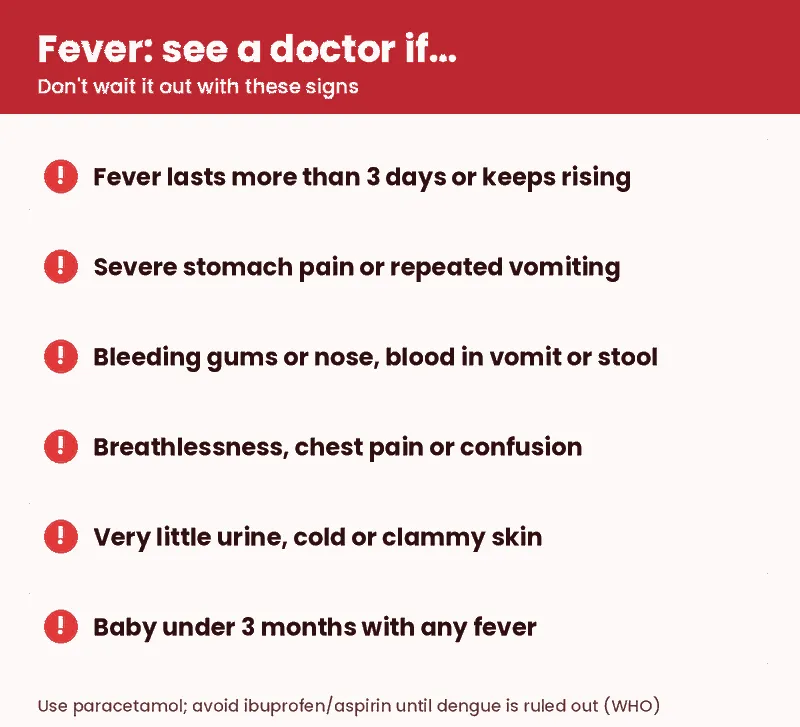
- Fever above 39.5°C to 40°C (103°F to 104°F) that doesn't come down with paracetamol
- Fever lasting more than 3 days, or rising each day
- Severe stomach pain or repeated vomiting
- Bleeding from the gums or nose, blood in vomit or stool, or new red spots on the skin
- Breathlessness, chest pain or confusion
- Very little urine, extreme thirst, cold or clammy skin
One point people often miss: in dengue, the dangerous phase often starts after the fever drops. The WHO notes that severe dengue symptoms often appear once the fever has gone, so don't relax just because the thermometer looks normal if the other signs are there.
Viral fever treatment at home
There's no medicine that kills the common viruses behind most fevers. Treatment means helping your body while it clears the infection.
- Rest. Take the days off. Pushing through usually makes recovery longer.
- Drink more than you think you need. Water, ORS, coconut water, dal water, soups and buttermilk all count. Aim for pale yellow urine.
- Paracetamol for fever and pain. Use the dose on the pack for your age and weight, and don't go over the daily maximum. For children, dose by weight and use the measuring syringe or cup that comes with the syrup.
- Avoid ibuprofen and aspirin until dengue is ruled out. The WHO advises avoiding these painkillers in suspected dengue because they can raise the risk of bleeding.
- Don't start antibiotics on your own. They don't work on viruses, and leftover strips from the last illness can hide the signs of typhoid and make testing harder.
- Sponge with lukewarm water if the fever is making you uncomfortable. Not cold water or ice, which causes shivering.
- Stay home until the fever has gone, to avoid passing it on. Wash hands often and cover coughs.
During viral fever, what to eat
Appetite drops, and that's fine for a day or two. What matters most is fluids and easy-to-digest food:
- Light meals: khichdi, dal-chawal, curd rice, idli, upma, soft roti with lauki or tinda sabzi
- Liquids: clear soups, dal water, ORS, coconut water, nimbu paani, buttermilk
- Fruit: banana, papaya, orange, apple and pomegranate are easy to eat when you have little appetite
- Avoid for a few days: fried and very spicy food, heavy sweets, and alcohol
There's no special food that cures a fever, but getting enough fluid and protein helps you get your strength back faster afterwards. Our list of everyday foods from an Indian kitchen covers many of the same nutrient-rich basics.
How to avoid catching it
- Wash hands with soap before eating and after coming home.
- Keep sick family members' towels and glasses separate.
- Drink boiled or filtered water, and be careful with street food and cut fruit, which can carry typhoid.
- Empty standing water in coolers, pots and flower trays every week. That's where dengue mosquitoes breed.
- Ask your doctor about the yearly flu vaccine, especially for older adults and people with diabetes, asthma or heart disease.
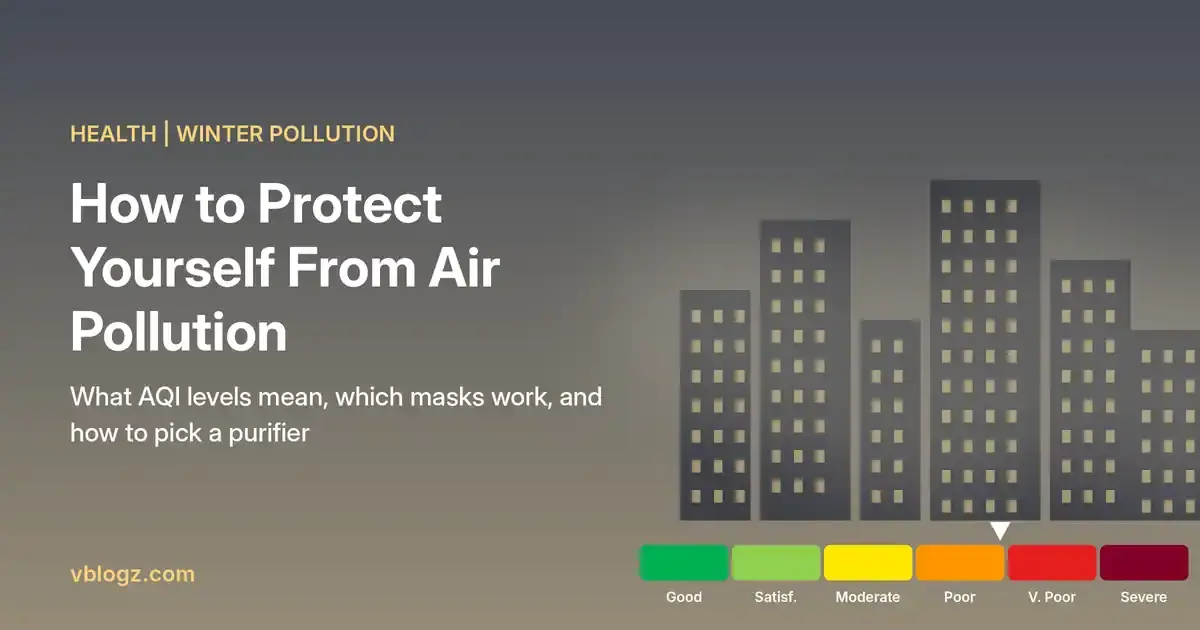
Winter smog can also cause a sore throat and cough. If yours gets worse on high-AQI days, our winter air pollution guide covers masks, purifiers and when to see a doctor.
Frequently asked questions
Is viral fever contagious?
Yes. The viruses spread through coughs, sneezes, close contact and shared surfaces. You're usually most contagious in the first few days, so stay home until the fever is gone.
How many days does viral fever last?
Usually 3 to 5 days, sometimes up to a week with flu. Weakness can last another week. If the fever goes past 3 days or keeps rising, see a doctor.
What is the best medicine for viral fever?
Paracetamol at the dose on the pack is the usual choice for fever and body ache. Antibiotics don't work on viral fever. Avoid ibuprofen and aspirin until a doctor has ruled out dengue.
Why does viral fever come at night?
Body temperature naturally rises in the evening, so a fever often feels worse at night. It's common and not a sign that the illness is getting worse.
Why does viral fever keep coming back?
A fever that returns after a day or two of feeling better could be a new infection picked up from someone else at home, or something other than a virus, such as typhoid or malaria. That's a reason to see a doctor and get tested.








Comments 0
No comments yet. Start the conversation.