

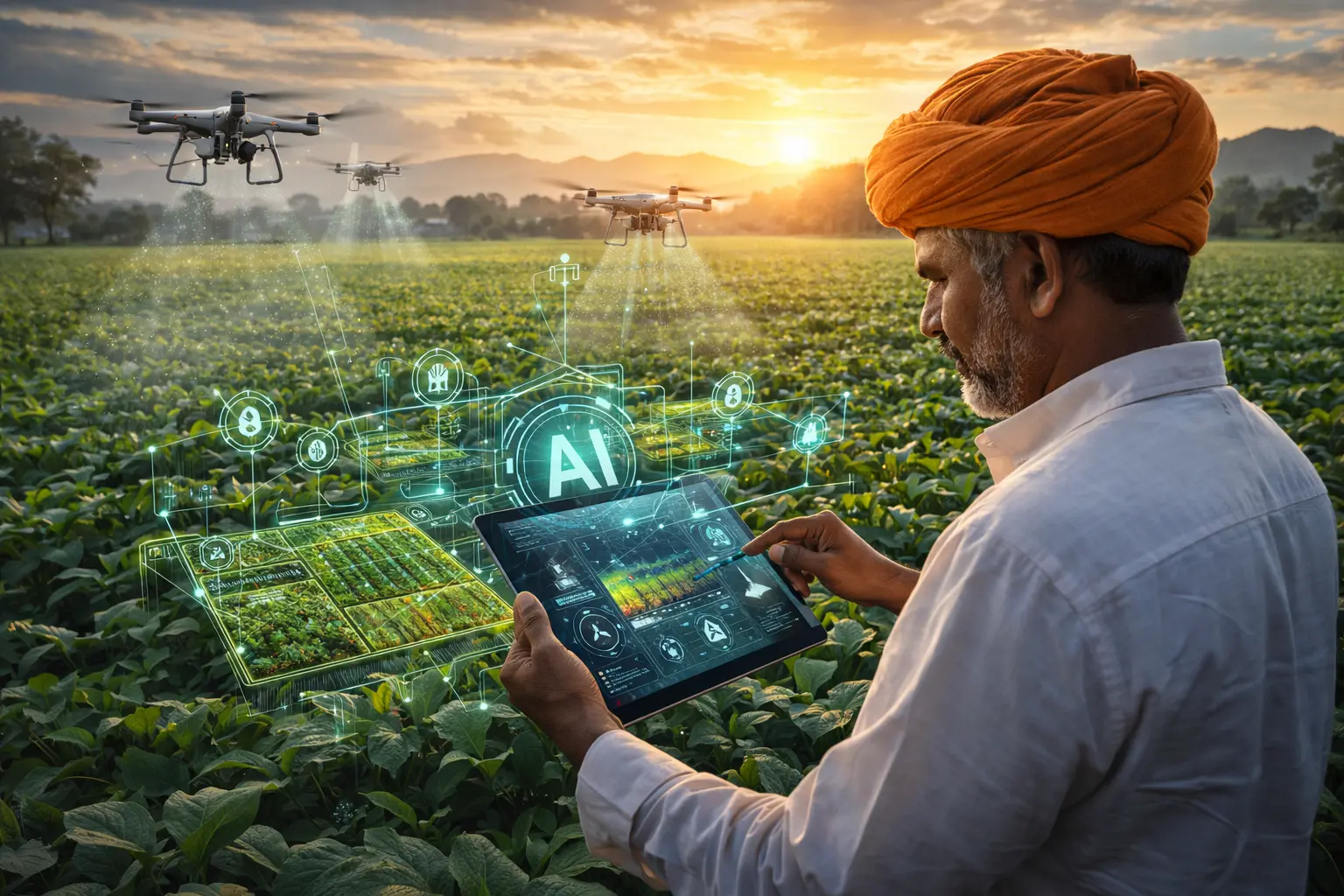
Introduction to India's Agricultural Revolution
India's agricultural sector is on the cusp of a revolution, driven by the adoption of Artificial Intelligence (AI) tools, machine learning, and software development. According to Dr. Jitendra Singh, India's next agricultural revolution will be AI-driven, with the potential to increase crop yields, reduce waste, and improve the livelihoods of farmers. In this blog post, we will explore the role of AI in India's agricultural sector, and how it is transforming the way farmers work.
The Current State of Indian Agriculture
Challenges Faced by Indian Farmers
Indian farmers face numerous challenges, including limited access to credit, inadequate irrigation facilities, and a lack of modern farming techniques. The use of AI tools, such as machine learning algorithms and data analytics, can help farmers overcome these challenges and improve their productivity. For example, AI-powered smartphone apps can provide farmers with real-time information on weather patterns, soil health, and crop prices.
Opportunities for Growth
The Indian agricultural sector is poised for growth, with the government launching several initiatives to promote the use of technology in farming. The National Mission on Agricultural Extension and Technology is one such initiative, which aims to increase the use of technology in farming and improve the livelihoods of farmers. The use of cloud computing and blockchain can also help farmers to access new markets and improve their incomes.
The Role of AI in Indian Agriculture
Precision Farming
AI tools, such as drone technology and satellite imaging, can help farmers to practice precision farming, which involves the use of advanced technology to optimize crop yields and reduce waste. Precision farming can help farmers to identify areas where crops are under stress, and take corrective action to improve yields. For example, AI-powered drones can be used to monitor crop health and detect pests and diseases.
Decision Support Systems
AI-powered decision support systems can help farmers to make informed decisions about planting, harvesting, and marketing their crops. These systems use machine learning algorithms to analyze data on weather patterns, soil health, and market trends, and provide farmers with personalized recommendations. For example, AI-powered smartphone apps can provide farmers with real-time information on weather patterns and crop prices.
Software Development for Agriculture
Customized Software Solutions
Software development companies are creating customized software solutions for the agricultural sector, which can help farmers to improve their productivity and incomes. For example, farm management software can help farmers to track their expenses, manage their inventory, and optimize their harvests. The use of data science and machine learning can also help farmers to analyze data on their crops and make informed decisions.
Cybersecurity for Agricultural Systems
The use of technology in farming also raises concerns about cybersecurity, as farmers' data and systems can be vulnerable to cyber attacks. Software development companies must ensure that their solutions are secure and protected from cyber threats. For example, AI-powered cybersecurity systems can be used to detect and prevent cyber attacks on agricultural systems.
Tech Trends in Indian Agriculture
Cloud Computing and Blockchain
The use of cloud computing and blockchain is becoming increasingly popular in the Indian agricultural sector, as it can help farmers to access new markets and improve their incomes. For example, blockchain-based platforms can be used to connect farmers with buyers and provide them with real-time information on market trends. The use of AI tools and machine learning can also help farmers to analyze data on their crops and make informed decisions.
Digital Transformation
The Indian agricultural sector is undergoing a digital transformation, with the use of technology becoming increasingly prevalent in farming. The government is also launching several initiatives to promote the use of technology in farming, such as the National Mission on Agricultural Extension and Technology. The use of AI-powered smartphone apps and data analytics can help farmers to improve their productivity and incomes.
Real Examples of AI in Indian Agriculture
Case Study: Precision Farming in Punjab
A case study in Punjab, India, demonstrates the effectiveness of precision farming using AI tools. Farmers in Punjab used drone technology and satellite imaging to practice precision farming, which resulted in a significant increase in crop yields and a reduction in waste. The use of AI-powered decision support systems also helped farmers to make informed decisions about planting, harvesting, and marketing their crops.
Case Study: Farm Management Software in Maharashtra
A case study in Maharashtra, India, demonstrates the effectiveness of farm management software in improving the productivity and incomes of farmers. Farmers in Maharashtra used farm management software to track their expenses, manage their inventory, and optimize their harvests, which resulted in a significant increase in their incomes. The use of data science and machine learning also helped farmers to analyze data on their crops and make informed decisions.
_ACTIONABLE TIPS FOR FARMERS
Tip 1: Use AI-Powered Smartphone Apps
Farmers can use AI-powered smartphone apps to access real-time information on weather patterns, soil health, and crop prices. For example, AI-powered smartphone apps can provide farmers with personalized recommendations on planting, harvesting, and marketing their crops.
Tip 2: Practice Precision Farming
Farmers can practice precision farming using AI tools, such as drone technology and satellite imaging. Precision farming can help farmers to optimize crop yields and reduce waste.
The use of AI tools and machine learning can help farmers to improve their productivity and incomes, and contribute to India's next agricultural revolution.
Frequently Asked Questions
- Q: What is the role of AI in Indian agriculture?
AI tools, such as machine learning algorithms and data analytics, can help farmers to improve their productivity and incomes, and contribute to India's next agricultural revolution.
- Q: How can farmers use AI-powered smartphone apps?
Farmers can use AI-powered smartphone apps to access real-time information on weather patterns, soil health, and crop prices, and receive personalized recommendations on planting, harvesting, and marketing their crops.
- Q: What are the benefits of precision farming?
Precision farming can help farmers to optimize crop yields and reduce waste, and improve their incomes.
- Q: How can farmers use farm management software?
Farmers can use farm management software to track their expenses, manage their inventory, and optimize their harvests, which can help them to improve their productivity and incomes.
- Q: What is the importance of cybersecurity in agricultural systems?
Cybersecurity is critical in agricultural systems, as farmers' data and systems can be vulnerable to cyber attacks. Software development companies must ensure that their solutions are secure and protected from cyber threats.
Conclusion
In conclusion, India's next agricultural revolution will be AI-driven, with the use of AI tools, machine learning, and software development transforming the way farmers work. The use of cloud computing and blockchain can also help farmers to access new markets and improve their incomes. As the Indian agricultural sector continues to evolve, it is essential for farmers to adopt new technologies and innovative approaches to improve their productivity and incomes.
The future of Indian agriculture is bright, with the potential for significant growth and development. As Dr. Jitendra Singh noted, India's next agricultural revolution will be AI-driven, and it is essential for farmers, policymakers, and industry leaders to work together to promote the use of technology in farming and improve the livelihoods of farmers.
Read Also
- 150+ Computer Full Forms List (A–Z) with Meaning | Complete Guide
- How AI Agents and Tech Will Transform Health Care in 2026
- How to Make Money Online in 2026
- Top 10 Blogging Platforms in 2026: Best Blog Websites for Beginners & Professionals
- Transforming Healthcare Delivery Through Artificial Intelligence
- Ditch the Bloat: A Safe Guide to Removing Preinstalled iPhone Apps





Comments