

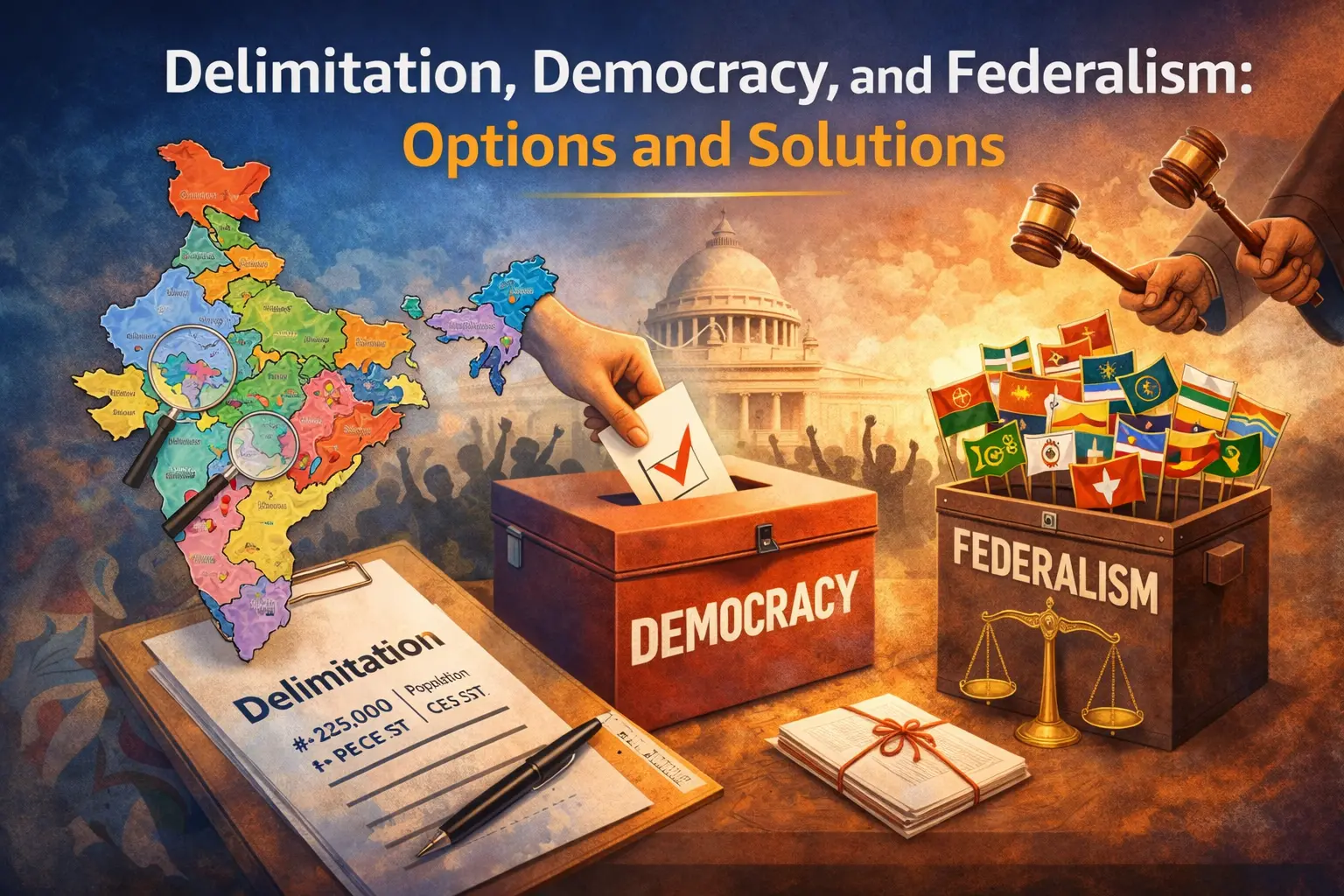
Introduction to Delimitation, Democracy, and Federalism
The concepts of delimitation, democracy, and federalism are fundamental to the functioning of any government, particularly in a vast and diverse country like India. As the elections 2026 approach, it is essential to examine these concepts in depth and explore their implications for Indian politics and government policy. In this blog post, we will delve into the intricacies of delimitation, democracy, and federalism, and discuss potential solutions for a stronger, more inclusive government.
Understanding Delimitation
What is Delimitation?
Delimitation refers to the process of defining and adjusting the boundaries of electoral constituencies. This process is crucial in ensuring that each constituency has a roughly equal number of voters, thereby preventing any one constituency from having too much or too little representation in the parliament session.
Importance of Delimitation
The importance of delimitation lies in its ability to promote fairness and equity in the electoral process. By ensuring that each constituency has a similar number of voters, delimitation helps to prevent gerrymandering and ensures that each vote counts equally. This, in turn, strengthens democracy and promotes a more representative government.
Democracy in India
Evolution of Democracy in India
India has a long and complex history of democracy, dating back to the country's independence in 1947. Over the years, India has made significant strides in strengthening its democratic institutions and promoting political analysis and international relations. However, despite these advances, India still faces numerous challenges in its democratic journey, including corruption, inequality, and social injustice.
Challenges to Democracy in India
One of the significant challenges to democracy in India is the issue of political news today being dominated by sensationalism and partisan politics. This can lead to a lack of informed discourse and nuanced political analysis, which is essential for a healthy democracy. Furthermore, the influence of money and special interest groups in Indian politics can undermine the integrity of the democratic process and perpetuate inequality.
Federalism in India
What is Federalism?
Federalism refers to a system of government in which power is divided between a central authority and constituent units, such as states or provinces. In India, federalism is enshrined in the Constitution, which divides power between the central government and the states.
Importance of Federalism
The importance of federalism lies in its ability to promote diversity, inclusivity, and regional autonomy. By giving states a significant degree of autonomy, federalism allows for more effective governance and decision-making at the local level, which is essential for addressing the unique needs and challenges of each region.
Options for Strengthening Democracy and Federalism
Electoral Reforms
One of the key options for strengthening democracy and federalism in India is electoral reform. This can include measures such as proportional representation, automatic voter registration, and limits on campaign finance. These reforms can help to promote a more representative and inclusive government, and reduce the influence of money and special interest groups in politics.
Decentralization and Empowerment of Local Governments
Another option for strengthening democracy and federalism is decentralization and empowerment of local governments. This can involve devolving more power and resources to local governments, and promoting participatory governance and citizen engagement. By giving local governments more autonomy and resources, decentralization can help to promote more effective and responsive governance, and address the unique needs and challenges of each region.
Solutions for a Stronger, More Inclusive Government
Legislation and Policy Reforms
One of the key solutions for a stronger, more inclusive government is legislation and policy reforms. This can include measures such as anti-corruption laws, social welfare programs, and environmental regulations. These reforms can help to promote transparency, accountability, and good governance, and address the significant challenges facing India, including poverty, inequality, and climate change.
Citizen Engagement and Participation
Another solution for a stronger, more inclusive government is citizen engagement and participation. This can involve promoting participatory governance, citizen-led initiatives, and independent media. By giving citizens a greater voice and role in governance, citizen engagement can help to promote a more responsive and accountable government, and address the unique needs and challenges of each region.
International Relations and Economy Policy
Impact of International Relations on Indian Economy
The international relations of India have a significant impact on the country's economy policy. India's trade relationships, diplomatic engagements, and participation in international organizations can all influence the country's economic growth, stability, and development. As such, it is essential for India to promote a strong and effective international relations strategy, which can help to promote economic cooperation, investment, and growth.
Role of Economy Policy in Shaping International Relations
The economy policy of India also plays a crucial role in shaping the country's international relations. India's economic policies, including trade agreements, investment regulations, and taxation laws, can all influence the country's relationships with other nations and international organizations. As such, it is essential for India to promote a coherent and effective economy policy, which can help to promote economic growth, stability, and development, and strengthen the country's international relations.
FAQs
- What is delimitation, and why is it important in Indian politics?
Delimitation refers to the process of defining and adjusting the boundaries of electoral constituencies. It is essential in ensuring that each constituency has a roughly equal number of voters, thereby preventing any one constituency from having too much or too little representation in the parliament session.
- How can democracy be strengthened in India?
Democracy can be strengthened in India through electoral reforms, decentralization, and empowerment of local governments, as well as promotion of citizen engagement and participation.
- What is federalism, and why is it important in India?
Federalism refers to a system of government in which power is divided between a central authority and constituent units, such as states or provinces. It is essential in promoting diversity, inclusivity, and regional autonomy, and allowing for more effective governance and decision-making at the local level.
- How can the Indian government promote a stronger, more inclusive economy?
The Indian government can promote a stronger, more inclusive economy through legislation and policy reforms, such as anti-corruption laws, social welfare programs, and environmental regulations, as well as promotion of citizen engagement and participation.
- What is the role of international relations in shaping India's economy policy?
International relations play a crucial role in shaping India's economy policy, as the country's trade relationships, diplomatic engagements, and participation in international organizations can all influence its economic growth, stability, and development.
Conclusion
In conclusion, the concepts of delimitation, democracy, and federalism are fundamental to the functioning of any government, particularly in a vast and diverse country like India. As the elections 2026 approach, it is essential to examine these concepts in depth and explore their implications for Indian politics and government policy. By promoting electoral reforms, decentralization, and empowerment of local governments, as well as citizen engagement and participation, India can strengthen its democracy and federalism, and promote a more inclusive and effective government. Furthermore, by promoting a strong and effective international relations strategy, and a coherent and effective economy policy, India can promote economic cooperation, investment, and growth, and strengthen its position in the global economy.
The future of Indian politics and government policy depends on the ability of its leaders to promote a more inclusive, participatory, and effective democracy, and to address the significant challenges facing the country, including poverty, inequality, and climate change. By working together and promoting a shared vision for a stronger, more inclusive India, citizens, politicians, and policymakers can help to build a brighter future for the country and its people.
Read Also
- Alone in a Trumpian world: The EU and global public opinion after the US elections
- Decoding 2025: The Global Issues That Will Shape India's Future
- Political Representation of Women in India: An Analysis of the Current State and Future Prospects
- Is the Trump Presidency a Turning Point in World Politics?
- Budget 2026: How Fiscal Allocations Are Reshaping Centre–State Relations
- History's Biggest Census: Why India's New Population Count is Controversial





Comments