

On this page 8 sections
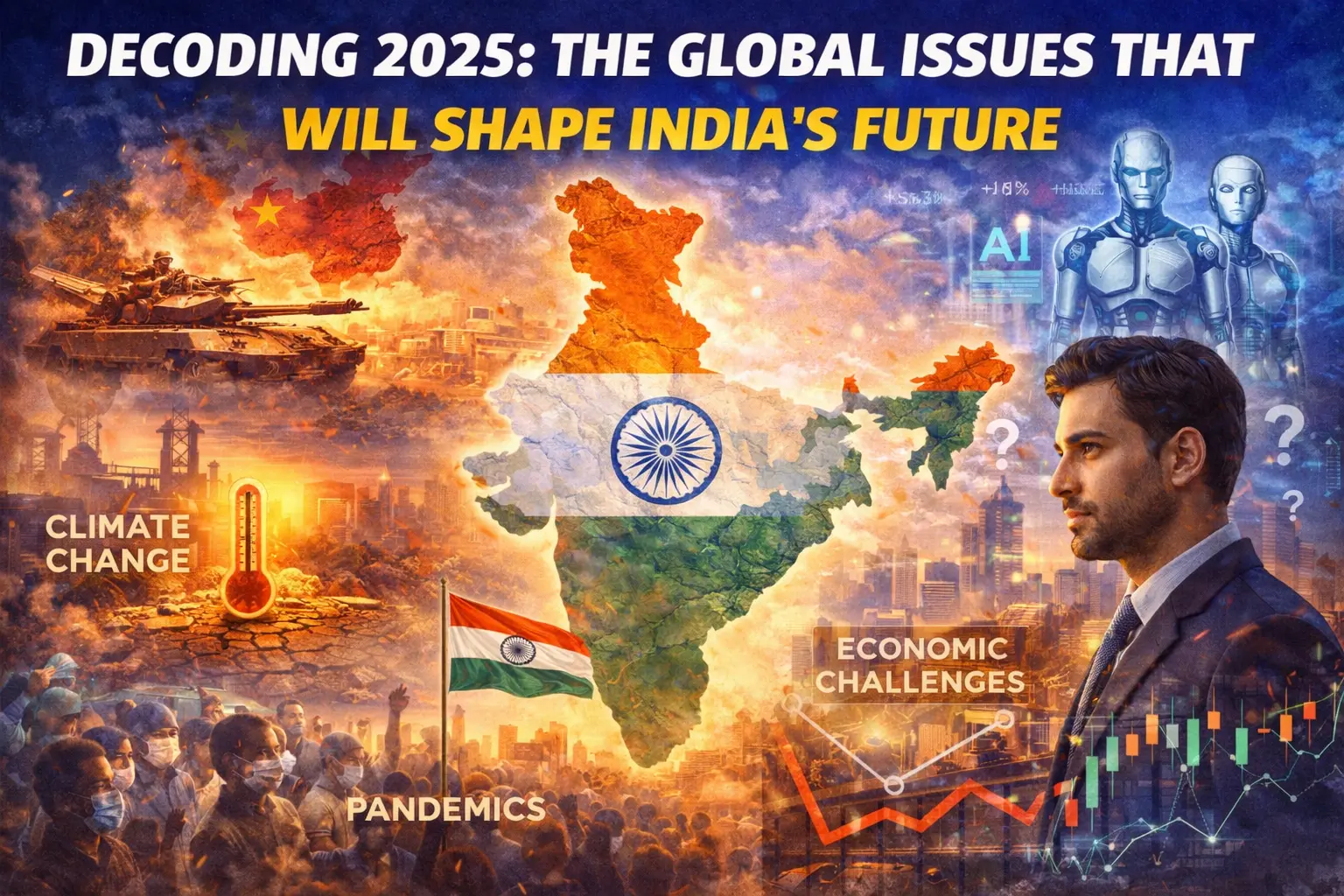
From the ongoing conflict in Ukraine to the rising tensions between the US and China, these developments will have far-reaching consequences for India and the world.
In this article, we will delve into the top 10 issues that will shape the international agenda in 2025, with a special focus on their impact on India.
The New World Order
The world is witnessing a significant shift in the global balance of power, with emerging economies like India and China gaining prominence. This shift is expected to continue in 2025, with India's growing economy and increasing global influence set to play a major role. Unlike China's approach, which has been marked by aggression and expansionism, India has adopted a more nuanced and multi-alignment strategy.
For instance, India's decision to join the Quadrilateral Security Dialogue (Quad) has been seen as a significant move to counterbalance China's growing influence in the Indo-Pacific region.
According to a report by the Lowy Institute, India's participation in the Quad has the potential to enhance its economic and security ties with other member countries, including the US, Japan, and Australia.
What's at Stake for India
The issues that will shape the international agenda in 2025 will have a direct impact on India's politics, economy, and international relations.
For example, the ongoing conflict in Ukraine has resulted in a significant increase in oil prices, which has affected India's economy.
According to a report by the International Energy Agency (IEA), India's oil import bill is expected to increase by 25% in 2025, which will have a significant impact on the country's fiscal deficit.
Similarly, the rising tensions between the US and China will have a significant impact on India's trade relations with both countries.
As stated by India's Minister of Commerce and Industry, Piyush Goyal, the country is seeking to diversify its trade relationships and reduce its dependence on any one country.
The India Angle: Economic and Political Implications
The issues that will shape the international agenda in 2025 will have a significant impact on India's economy and politics.
For instance, the implementation of the National Education Policy (NEP) 2020 is expected to have a major impact on India's education sector, with a focus on vocational training and skills development.
According to a report by the Ministry of Education, the NEP is expected to increase India's GDP by 2% by 2025, by enhancing the country's human capital and increasing its competitiveness in the global market.
Similarly, the upcoming elections in 2026 will be significantly impacted by the global events of 2025, with issues like economic growth, national security, and international relations set to dominate the political discourse.
Who Wins, Who Loses: Following the Incentives
The issues that will shape the international agenda in 2025 will have winners and losers, with some countries and industries set to gain significantly while others will lose out.
For example, the growing demand for renewable energy is expected to benefit countries like India, which has set ambitious targets for renewable energy production.
According to a report by the International Renewable Energy Agency (IRENA), India's renewable energy sector is expected to attract investments worth $500 billion by 2025, creating millions of jobs and enhancing the country's energy security.
On the other hand, the decline of traditional industries like coal and steel is expected to have a significant impact on countries like China, which has a large number of workers employed in these sectors.
The Case Against: A Critique of the Dominant Narrative
Some critics argue that the issues that will shape the international agenda in 2025 are not as significant as they are made out to be, and that the global economy is resilient enough to withstand any shocks.
For instance, they point out that the global economy has withstood several crises in the past, including the 2008 financial crisis, and that it will continue to grow and evolve in the future.
However, this critique ignores the fact that the global economy is becoming increasingly complex and interconnected, and that the issues of 2025 will have a profound impact on the global balance of power.
As stated by the Managing Director of the International Monetary Fund (IMF), Kristalina Georgieva, the global economy is facing significant challenges, including rising debt levels, trade tensions, and climate change, which will require coordinated action by countries to address.
What Happens Next: A Prediction
Based on the analysis of the issues that will shape the international agenda in 2025, it is likely that the world will witness a significant shift in the global balance of power, with emerging economies like India and China gaining prominence.
The growing demand for renewable energy, the increasing importance of technology, and the rising tensions between the US and China will all contribute to this shift.
As stated by India's Prime Minister, Narendra Modi, the country is committed to playing a major role in shaping the global agenda, and will work to enhance its economic and strategic ties with other countries.
According to a report by the Centre for Strategic and International Studies (CSIS), India's growing global influence will be driven by its large and growing economy, its strategic location, and its commitment to democracy and multilateralism.
5 FAQs
- What are the top 10 issues that will shape the international agenda in 2025?
The top 10 issues include the ongoing conflict in Ukraine, the rising tensions between the US and China, the growing demand for renewable energy, the increasing importance of technology, and the upcoming elections in India. - How will these issues impact India?
These issues will have a significant impact on India's politics, economy, and international relations, with the country set to play a major role in shaping the global agenda. - What is the significance of the Quadrilateral Security Dialogue (Quad) for India?
The Quad is significant for India as it provides a platform for the country to enhance its economic and security ties with other member countries, including the US, Japan, and Australia. - How will the growing demand for renewable energy impact India's economy?
The growing demand for renewable energy is expected to benefit India's economy, with the sector set to attract investments worth $500 billion by 2025, creating millions of jobs and enhancing the country's energy security. - What is the prediction for the global economy in 2025?
The global economy is expected to witness a significant shift in the balance of power, with emerging economies like India and China gaining prominence, driven by the growing demand for renewable energy, the increasing importance of technology, and the rising tensions between the US and China.
Final Take
The issues that will shape the international agenda in 2025 will have a profound impact on the world, with India set to play a major role in shaping the global balance of power.
As the country gears up for elections in 2026, it is essential to understand the global context and the issues that will drive the international agenda.
With its growing economy, strategic location, and commitment to democracy and multilateralism, India is well-placed to take advantage of the opportunities presented by the global shift in power.
As stated by India's Foreign Minister, S. Jaishankar, the country is committed to enhancing its economic and strategic ties with other countries, and will work to promote its national interests in the global arena.






Comments 0
No comments yet. Start the conversation.