

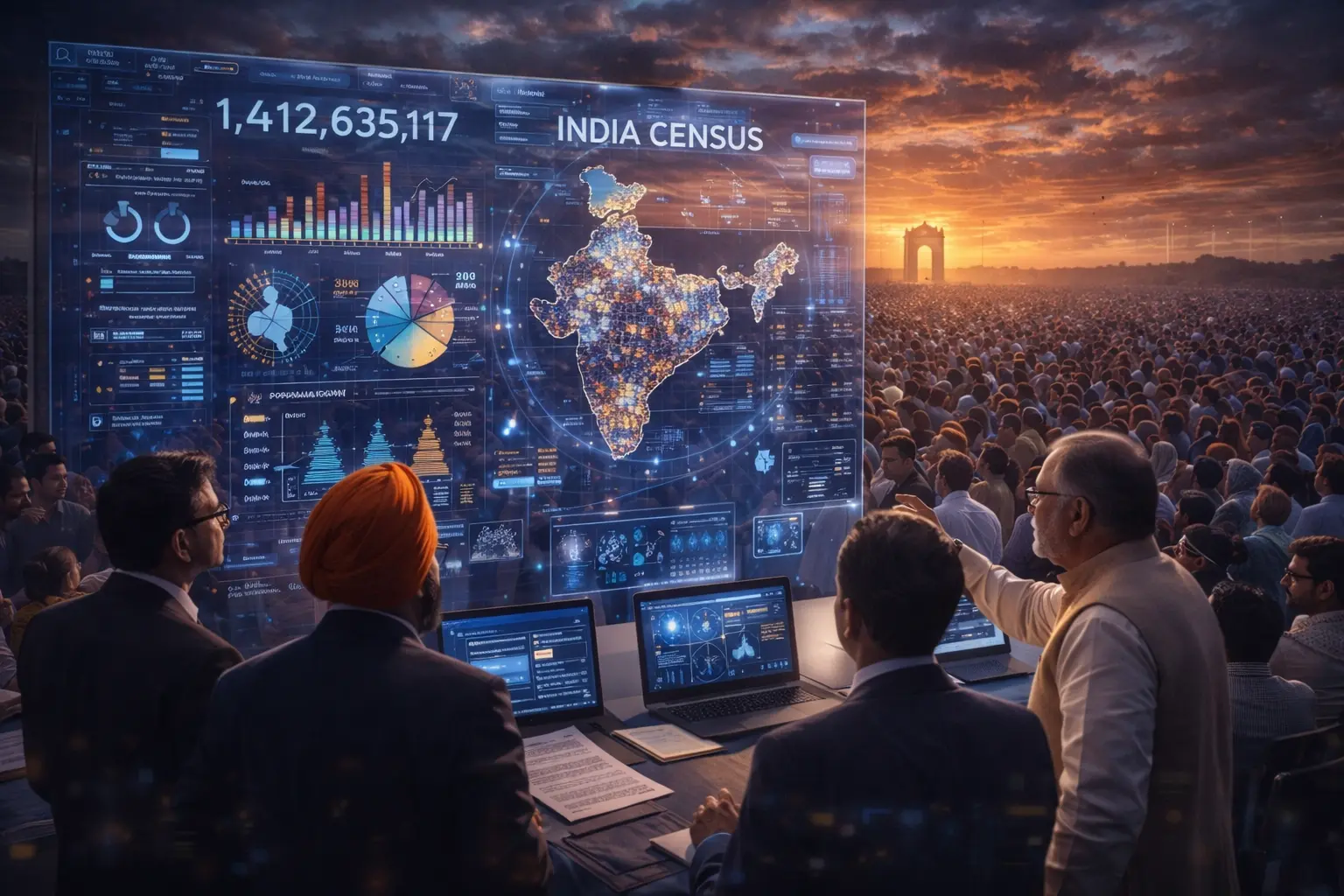
India's latest census, which aims to count the country's vast population of over 1.3 billion people, has been making headlines in recent months. The exercise, which is carried out every decade, is one of the largest and most complex in the world, involving hundreds of thousands of enumerators and a massive logistical effort. However, this year's census has been marred by controversy, with many questioning its methodology and potential impact on the country's democracy and economy. In this article, we will delve into the history of India's census, the challenges faced by the current exercise, and the potential implications for the country's politics and international relations.
History of India's Census
Early Years
The first census in India was conducted in 1872, during the British colonial era. The exercise was initially met with skepticism and even resistance from some sections of the population, but it eventually became an important tool for the colonial administration to gather data on the country's population and economy. Since then, the census has been conducted every decade, with the exception of 1941, when it was suspended due to World War II.
Post-Independence Era
After India gained independence in 1947, the census continued to be an important tool for the government to gather data on the country's population and economy. The first census after independence was conducted in 1951, and it has been carried out every decade since then. Over the years, the census has undergone significant changes, with the introduction of new technologies and methodologies to improve its accuracy and efficiency.
Challenges Faced by the Current Census
Methodological Concerns
One of the main concerns surrounding the current census is its methodology. The government has introduced a new approach, which involves the use of digital technologies to collect data. While this approach has the potential to improve the accuracy and efficiency of the census, it has also raised concerns about the potential for data breaches and privacy violations. Many have questioned the government's ability to protect the sensitive data collected during the census, and there are fears that it could be used for political purposes.
Logistical Challenges
The census is a massive exercise that requires significant resources and planning. The government has faced logistical challenges in conducting the census, including the recruitment and training of enumerators, the procurement of equipment and supplies, and the establishment of census offices and infrastructure. These challenges have been exacerbated by the COVID-19 pandemic, which has disrupted the census schedule and created new challenges for the government.
Potential Implications for India's Democracy
Impact on Voting Rights
The census has significant implications for India's democracy, particularly with regards to voting rights. The census data is used to determine the number of parliamentary and state assembly seats allocated to each state, and it also informs the delimitation of constituencies. However, there are concerns that the current census methodology could lead to inaccurate or biased data, which could have significant implications for the country's elections 2026 and the representation of marginalized communities.
Impact on Government Policy
The census data is also used to inform government policy and legislation. The data is used to allocate resources and funding to different states and regions, and it informs the development of policies and programs aimed at addressing social and economic inequalities. However, if the census data is inaccurate or biased, it could lead to misguided policies and programs that fail to address the needs of marginalized communities.
International Relations and Economy Policy
Impact on International Relations
The census has significant implications for India's international relations, particularly with regards to its relationships with neighboring countries. The census data is used to inform India's foreign policy, and it has significant implications for the country's trade and economic relationships. However, if the census data is inaccurate or biased, it could lead to misunderstandings and tensions with neighboring countries.
Impact on Economy Policy
The census data is also used to inform India's economy policy, particularly with regards to the allocation of resources and funding to different states and regions. The data is used to identify areas of economic growth and development, and it informs the development of policies and programs aimed at addressing poverty and inequality. However, if the census data is inaccurate or biased, it could lead to misguided economic policies that fail to address the needs of marginalized communities.
Parliament Session and Political Analysis
Debate and Discussion
The census has been the subject of significant debate and discussion in the parliament session. Members of parliament have raised concerns about the methodology and potential implications of the census, and there have been calls for greater transparency and accountability. The debate has highlighted the need for a more nuanced and informed discussion about the census and its implications for India's democracy and economy.
Political Analysis
The census has significant implications for India's political analysis, particularly with regards to the political news today. The data is used to inform political campaigns and election strategies, and it has significant implications for the representation of marginalized communities. However, if the census data is inaccurate or biased, it could lead to misguided political analysis and strategies that fail to address the needs of these communities.
Frequently Asked Questions
FAQs
- What is the purpose of the census? The purpose of the census is to gather data on the country's population and economy, which is used to inform government policy and legislation.
- How is the census conducted? The census is conducted every decade, using a combination of digital and traditional methodologies.
- What are the implications of the census for India's democracy? The census has significant implications for India's democracy, particularly with regards to voting rights and government policy.
- How does the census impact India's international relations? The census has significant implications for India's international relations, particularly with regards to its relationships with neighboring countries.
- What are the potential implications of the census for India's economy? The census has significant implications for India's economy, particularly with regards to the allocation of resources and funding to different states and regions.
Conclusion
In conclusion, India's latest census has sparked controversy, with many questioning its methodology and potential impact on the country's democracy and economy. As the country prepares for elections 2026, it is essential that the government addresses these concerns and ensures that the census is conducted in a fair, transparent, and accurate manner. The implications of the census are far-reaching, and it is essential that the government takes a nuanced and informed approach to addressing the challenges and opportunities presented by the exercise. By doing so, India can ensure that its democracy and economy continue to thrive, and that the needs of all citizens are addressed.
Read Also
- Alone in a Trumpian world: The EU and global public opinion after the US elections
- Decoding 2025: The Global Issues That Will Shape India's Future
- Political Representation of Women in India: An Analysis of the Current State and Future Prospects
- Is the Trump Presidency a Turning Point in World Politics?
- Budget 2026: How Fiscal Allocations Are Reshaping Centre–State Relations
- Waqf Bill: India's Parliament Passes Muslim Land Bill After Fierce Debates





Comments